Food / Sushi Made in Japan, Frozen for an American Supermarket
There are three ways to put sushi in a grocery case: hire someone to roll it, buy a machine, or make it in Japan and freeze it. A Tokyo freezer company is betting on the third.
At a Japanese supermarket chain in the United States, some of the sushi has crossed the Pacific frozen solid.
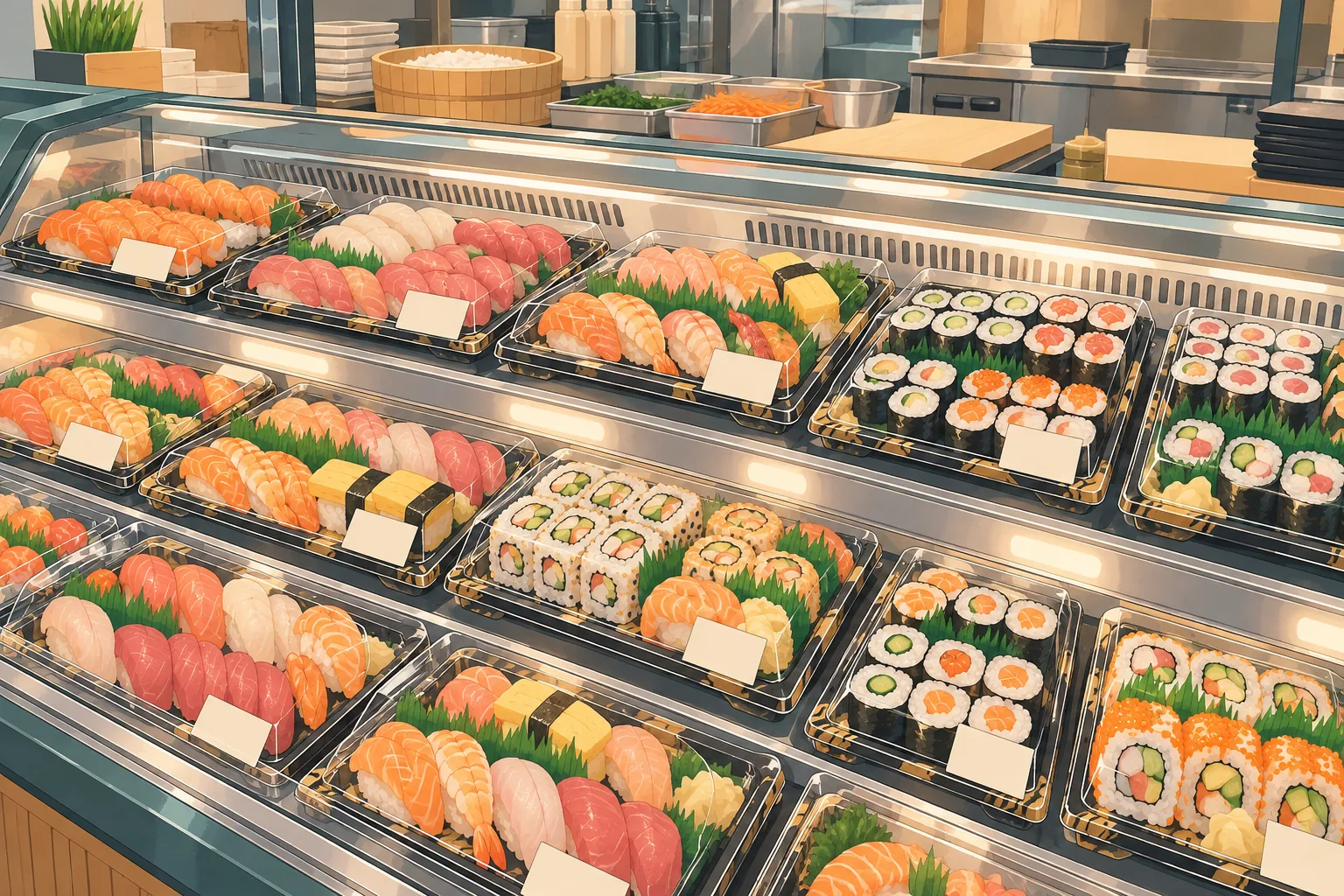
DayBreak, a Tokyo company that makes industrial freezers, began exporting frozen sushi in earnest in 2024, according to LOGISTICS TODAY. In June 2025, the company says, Mitsuwa Marketplace, the Japanese supermarket chain in the US, started carrying it. DayBreak calls it the first time frozen sushi developed in Japan has been fully introduced into American retail as a standard product, says it can be thawed in the refrigerator, and says the sales area is spreading from the West Coast to Hawaii. In November 2025 DayBreak set up a subsidiary in California.
Yoshihiro Katayama, who heads the new US subsidiary, gave a plain reason for the push: an American food industry facing labor shortages, food loss and logistics problems.
Three ways to fill a sushi case
In our reading, every supermarket that sells sushi has to answer one question: where does the rolling happen, and who does it?
Hire someone to roll it in the store. This is the model America's big grocery-sushi operators built. Advanced Fresh Concepts, founded by Ryuji Ishii, started with Vons in Southern California in 1986 and by 2011 ran sushi counters in 2,500 US supermarkets. Hissho Sushi said in 2018 that it had passed 1,200 locations in 41 states, with sushi bars in upscale supermarkets and other venues, and it works with franchisees.
Buy a machine. Suzumo Machinery, the Japanese maker of sushi robots, held 74.1% of the world market by value in 2024, according to a Fuji Keizai report cited by President Online. Its president told the magazine in 2026 that the US is by far its fastest-growing overseas market: Japanese food is well rooted there, and with American prices already high, an imported sushi robot does not feel expensive.
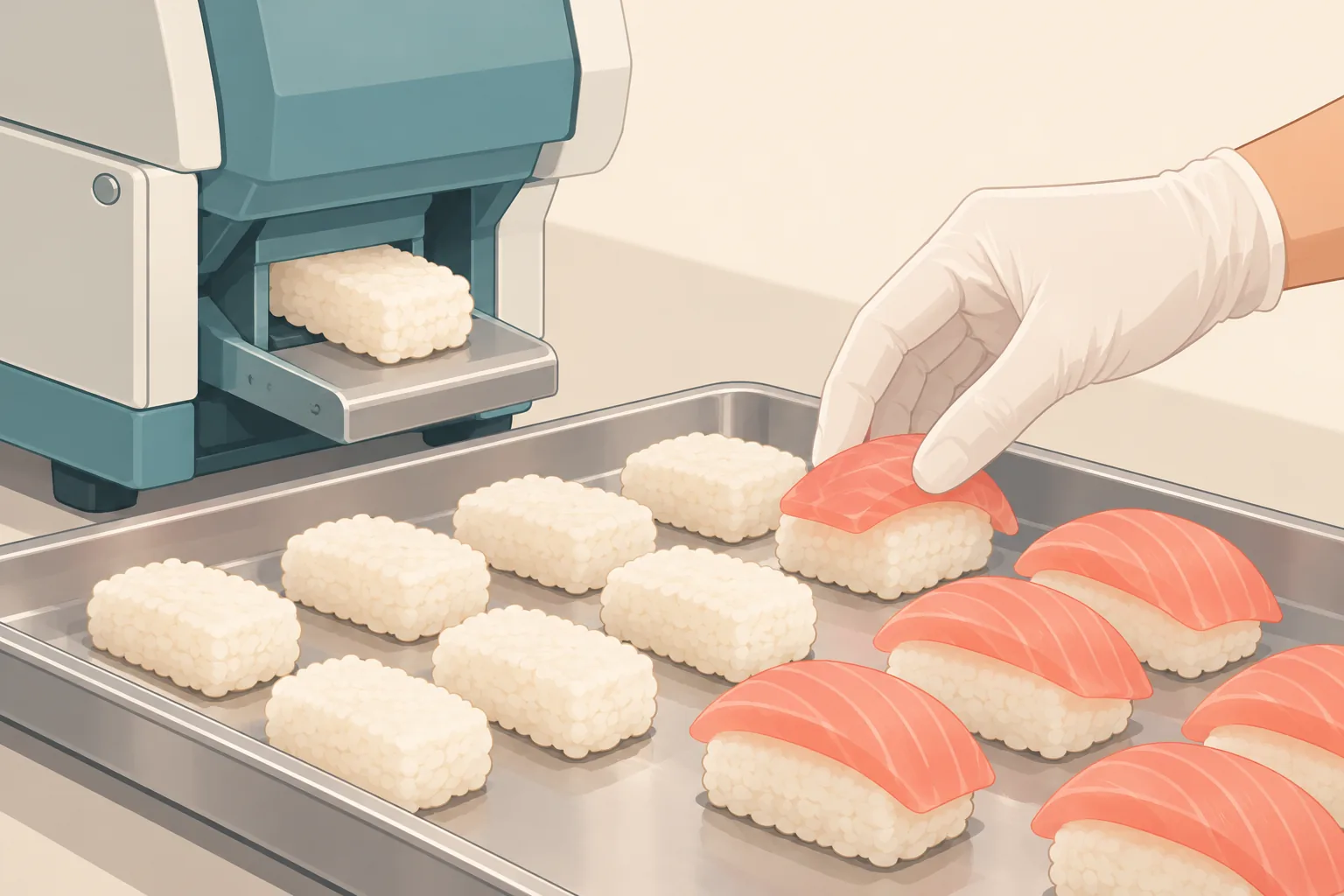
Make it in Japan and freeze it. This is DayBreak's bet. The sushi is finished in Japan, frozen, shipped, and thawed before it is eaten. Public sources we could check do not say whether that happens in the store or at home, so the comparison below covers both.
The hard part is the rice
Frozen sushi itself is not new: J-Stories notes that it is widely eaten, though poor freezing often hurts its quality. By DayBreak's own account, the hard part is the rice. Katayama, who is also DayBreak's vice president, says the company can freeze sushi and rice together while keeping them moist and tender, but he calls rice "very sensitive" and says every food needs its own freezing process. The company also sells the freezers: it says more than 700 businesses have adopted them since sales began in 2021.
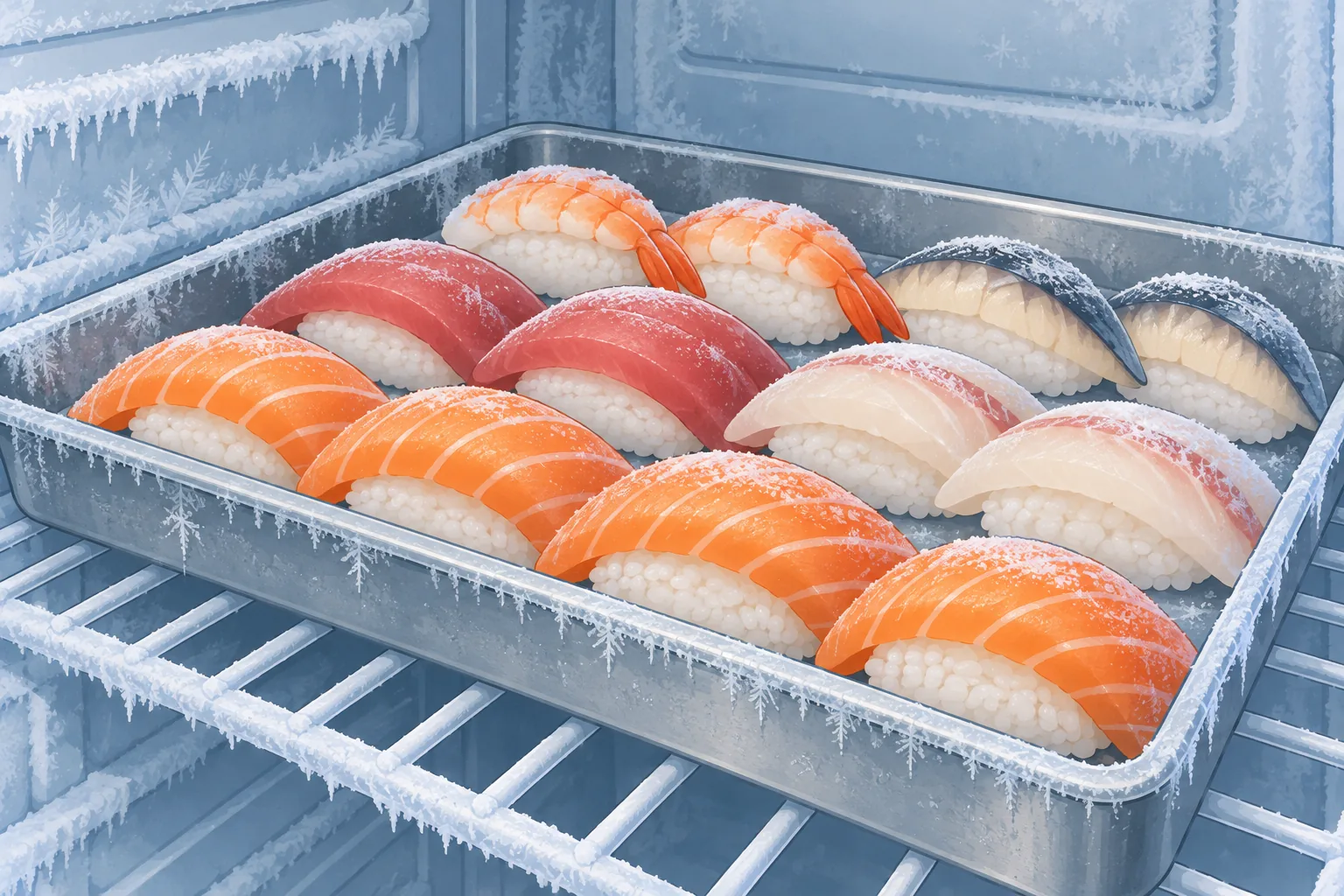
There is a limit. High-end restaurants, J-Stories points out, usually avoid frozen ingredients.
The twist: much American sushi fish is already frozen
Here is a detail American customers rarely see. The FDA's Food Code is a model that states and cities can adopt as their food-safety rules. Delaware's version, for example, requires most fish served raw to be frozen first to kill parasites, though some tunas, some farmed fish and some shellfish are exempt under set conditions (details in the note at the end).
In our reading, freezing fish is therefore nothing new for American sushi in places with rules like this, and frozen sushi itself is already widely eaten. What sets DayBreak's model apart is narrower: finished pieces made in Japan, frozen with its own equipment, shipped across the Pacific and sold in an American supermarket. What it asks customers to accept is sushi made thousands of miles away.
What each route trades
| Chef in the store | Robot in the store | Made in Japan, frozen | |
|---|---|---|---|
| Work done in the store | Cooking rice, rolling, packing | Cooking rice, running the machine, topping, packing | Frozen stocking; thawing, if the store thaws it before sale |
| What the store needs | Counter, tools, trained staff | The machine, plus staff to run it | Frozen storage; a thawing routine and a chilled case only if sold thawed |
| Freshness story | Made today, here | Made today, here | Made in Japan |
| Waste | Unsold fresh sushi | Unsold fresh sushi | Frozen stock that expires, plus unsold thawed sushi if thawed in store |
This is our reading, not data from DayBreak or any store. A store that keeps sushi frozen until it is needed might throw away less, but we found no published figures on staffing, total cost or waste for frozen sushi, so we cannot say which route is cheapest.
Note on the freezing rule: Delaware's rule allows -20°C (-4°F) for seven days, -35°C (-31°F) until solid and then 15 hours, or -35°C until solid and then 24 hours at -20°C. Exceptions include molluscan shellfish; some tunas such as yellowfin and bigeye; farmed fish such as salmon raised in net-pens or land-based operations on formulated feed with no live parasites infective to them; rinsed fish eggs; and scallop product that is only the shucked adductor muscle. Other states' rules may differ.
Could This Work in the U.S.?
Many American supermarkets sell sushi rolled by someone behind the deli counter. Now some sushi on those shelves can arrive from Japan in a freezer instead. Would your customers buy sushi whose label says "made in Japan, frozen"?
Company links
Links to the companies' own sites and to stock quotes. We have no business relationship with them.
- Suzumo Machinery — Official site
- Suzumo Machinery (6405, Tokyo Stock Exchange) — Stock quote
- Mitsuwa Marketplace — Official site
Sources
R1. DayBreak establishes American subsidiary to promote frozen sushi (press release, repost) — DayBreak via APOC Wire, 2025-12-08 R3. DayBreak sets up US subsidiary (Japanese) — LOGISTICS TODAY, 2025-11-21 R4. Fresh Japanese sushi on your table? Innovative freezing technology — J-Stories, 2025-03-21 R5. AFC Sushi celebrates 25 years in supermarkets — Supermarket News, 2011-03-28 R6. Hissho among 2018 middle market leaders (press release) — Deli Market News, 2018-08-13 R7. Interview with Suzumo Machinery president Tohru Taniguchi on its overseas sushi-robot sales — President Online, 2026-06-30 R8. Food Code 3-402.11 Parasite destruction (as adopted in Delaware) — Legal Information Institute R9. States get a new model Food Code from FDA — Food Safety News, 2023-01-04