Food / Takoyaki Without the Octopus: How Osaka's Street Snack Conquered the Philippines
In Manila you can buy three pieces from a cart for ₱28, filled with cabbage and carrots, or four from the Japanese chain Gindaco for ₱199, filled with octopus. Both are takoyaki.
In the Philippines, takoyaki often comes without the octopus.
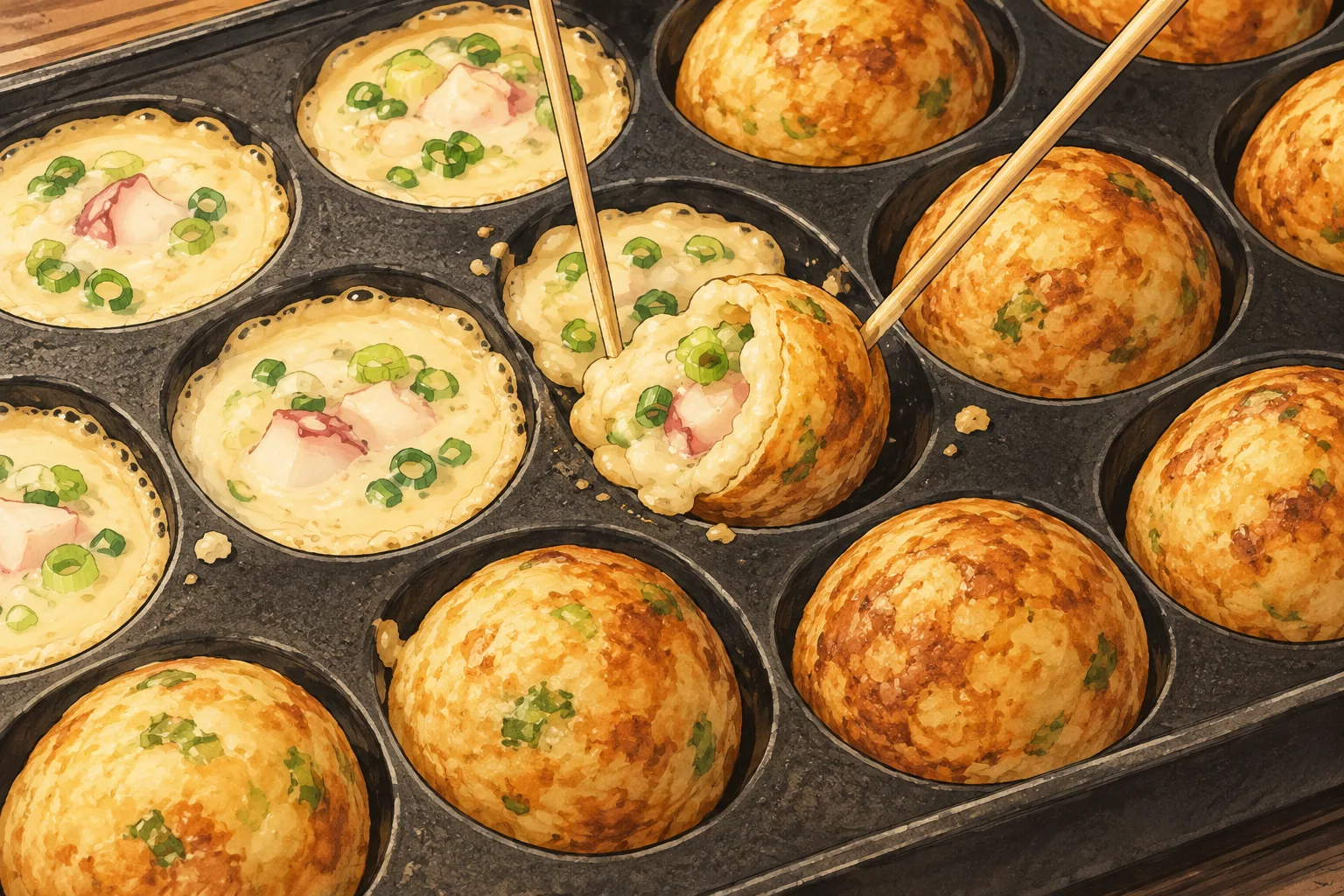
The snack itself is Osaka street food: balls of batter cooked in a griddle of half-round molds, turned with picks until they are crisp outside and soft inside, and traditionally built around a piece of octopus. In the Philippines it became something else. A local chain called Sumo Takoyaki launched in September 2014 selling three pieces for ₱28, filled with vegetables such as carrots and cabbage and topped with pork and chicken flakes. Its founders said they disliked the fishy aftertaste of the original and called their version "not really the authentic" one. Authentic takoyaki, the BusinessMirror noted at the time, cost about ₱80.
The cheaper version sold. Sumo reached 35 branches within three months, three of them franchised, and its owners put the startup capital for a stall, including all equipment, at ₱200,000.
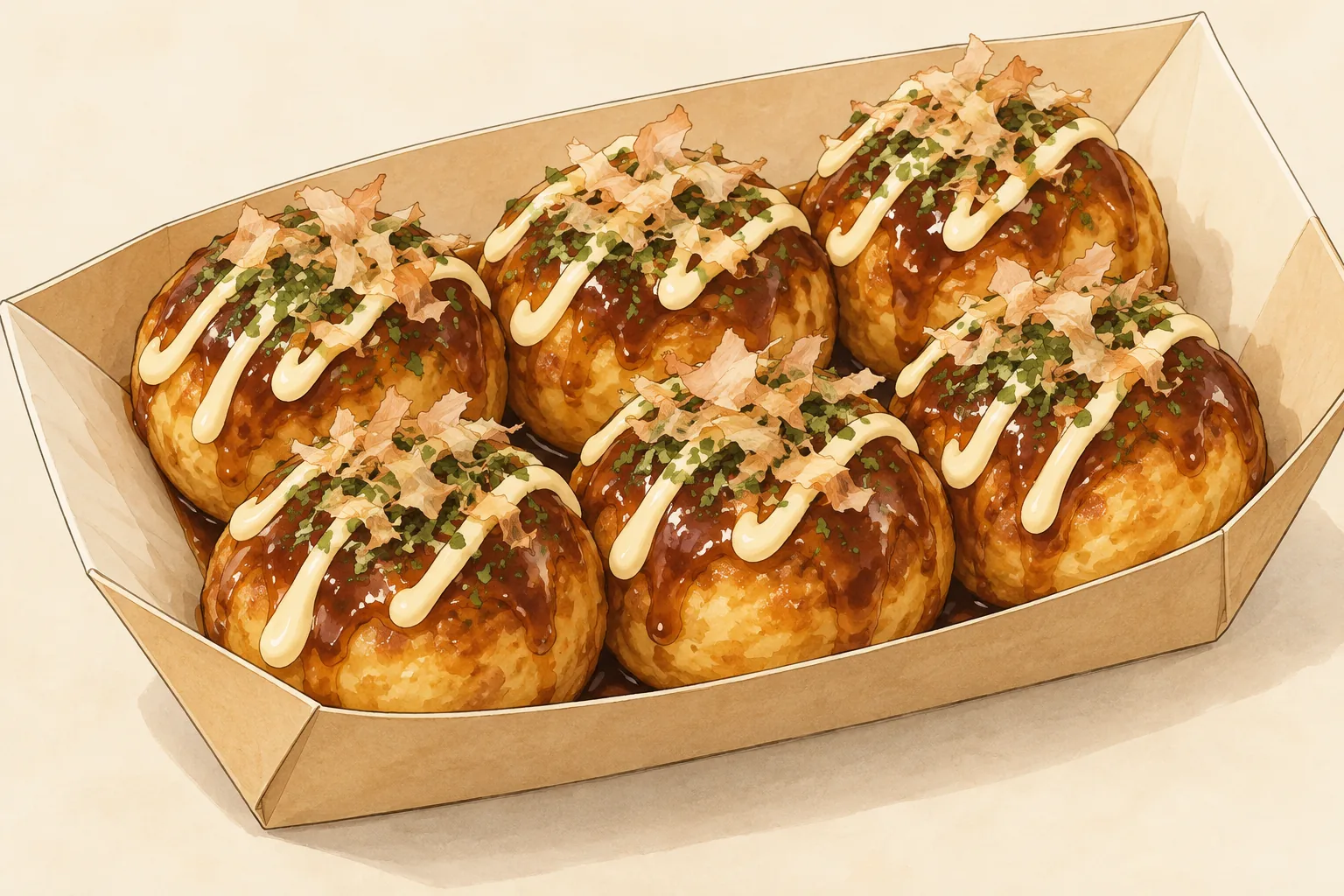
Eleven years later, in July 2025, Gindaco, presented as one of Japan's most popular takoyaki brands, opened its first Philippine store inside SM Mall of Asia. A second followed at SM North EDSA. Its Original Takoyaki, with a piece of octopus inside, costs ₱199 for four pieces, and the menu also has a triple-cheese version.
So the same snack has sat at two ends of the market: under ten pesos a ball from a cart at Sumo's 2014 price, or about ₱50 a ball from a Japanese brand in a mall today. The two prices are a decade apart and not adjusted for inflation, so the gap shows the range of the market, not a measured price premium.
A snack built for carts
In our reading, takoyaki fits the Philippine food-cart business almost perfectly.
A takoyaki cart needs a griddle, a burner and a small counter, and a 2025 Philippine guide puts the startup capital at about ₱57,000.

The filling is where the local version freed itself. The same guide lists octopus or squid, but also crab stick, hotdog, cheese, ham and tuna mayo, with servings priced at ₱35 to ₱70. A seller does not need a supply of octopus to sell takoyaki; the ball, the sauce and the name are enough.
The original arrives
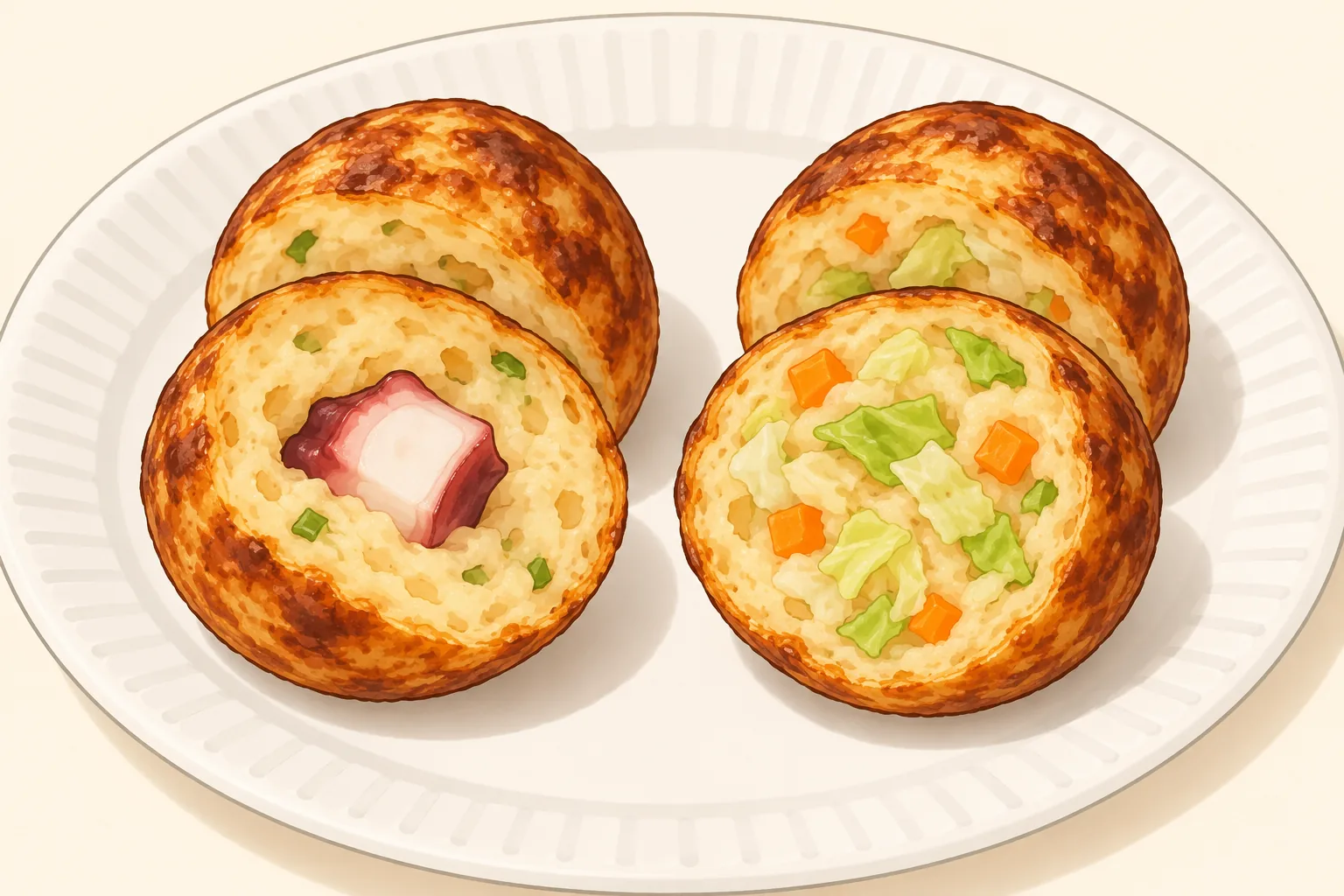
Gindaco's owner, Hotland, opened in the Philippines more than a decade after local cart brands had shaped the market. In our reading, Gindaco is betting that Filipinos who grew up on cheap cart takoyaki will pay mall prices for the version with octopus in it.
A pan the world already owns
Takoyaki did not land in an empty kitchen. The pan with rows of half-round cups is an old idea in many countries.
- Denmark makes æbleskiver at Christmas in a cast-iron pan with hemispherical cups, turning the batter with a knitting needle, skewer or fork to keep it round.
- The Netherlands sells poffertjes, small fluffy batter cakes cooked in a pan with shallow indentations, fresh from stands at fairs and Christmas markets.
- Thailand has khanom krok, coconut milk and rice flour cooked in an indented pan.
- South India has paddu, also called paniyaram or appe, a batter of black lentils and rice cooked on a pan with many small indentations.
The Philippines has its own round street snacks too: fish balls and squid balls, deep-fried and sold at street stalls.
In our reading, that is part of why takoyaki travels so easily. Plenty of places already know a ball of batter from a dimpled pan, or a fried ball from a stall. For some customers, the octopus may be the unfamiliar part, though how familiar octopus is varies a great deal from country to country.
So who actually eats octopus, where else has takoyaki gone, and what do Manila and Jakarta suggest? That's the members' edition.
Could This Work in the U.S.?
Gindaco sells takoyaki with octopus inside Dodger Stadium. In the Philippines, a ₱28 cart version without octopus reached 35 branches in three months, years before Gindaco arrived. Could a cheap, octopus-free takoyaki cart work at American malls and food halls?
What's in the members' edition
The story above is complete on its own. When memberships open, members will also get, by email: takoyaki around the world
- The scoreboard
- Indonesia: a mall brand with a cheap layer below
- The U.S.: the octopus question
- Europe: just starting
- Who actually eats octopus
- Manila and Jakarta: the octopus is optional
- The sauce that links Japan and the Middle East
- Where could it go next?
Company links
Links to the companies' own sites and to stock quotes. We have no business relationship with them.
- Gindaco — Official site
- Hotland Holdings — Official site
- Hotland Holdings (9933, Tokyo Stock Exchange) — Stock quote
- Otafuku Sauce — Official site
Sources
T1. Sweet Corner founder opens Sumo Takoyaki, another local franchise brand — BusinessMirror, 2014-11-25 T2. Sumo Takoyaki: the Filipino couple behind the business — Vulcan Post, 2018-02-20 T3. Takoyaki food cart business guide — Business Diary Philippines, 2025-06-30 T5. Consolidated financial results for the fiscal year ended December 2025 (kessan tanshin) — Hotland Holdings, 2026-02-13 T6. Gindaco opens in the Philippines — Primer, 2025 T9. Gindaco (brand page) — Kawan Lama Group T10. Food franchises under Rp5 million — Fortune Indonesia, 2025-02-14 T12. Cephalopods: tighter supplies and rising prices — FAO GLOBEFISH, 2023-04-27 T14. Trik membuat takoyaki dengan bahan yang mudah didapat di pasar lokal — Liputan6, 2026-03-09 T15. Cheese Jalapeno, a new flavor from Gindaco Indonesia — Medcom.id, 2019-10-01 T16. Æbleskiver — Wikipedia T17. Poffertjes — Wikipedia T18. Khanom krok — Wikipedia T19. Paddu — Wikipedia T20. Fish ball — Wikipedia T21. Halal okonomi sauce (product page) — Otafuku Sauce (official site) T24. Okonomiyaki to the world! OTAFUKU SAUCE got Halal certification — Halal Media Japan, 2017-04-15 T26. Los Angeles Dodgers and Tsukiji Gindaco announce multi-year partnership — MLB.com (press release), 2024-05-20 T27. December 2 is Date Day: we want to spread dates further in Japan (news release) — Otafuku Sauce (official site), 2020-11-20 T25. Otafuku Sauce Malaysia Sdn Bhd grand opening ceremony of the new halal-certified factory, Sendayan TechValley, Negeri Sembilan — MIDA (Malaysian Investment Development Authority), 2025-12-10